


How many trials are needed before a dessert arrives in the display case?
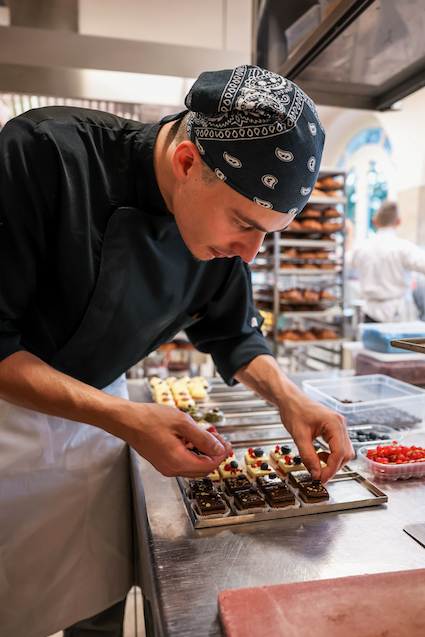
The idea: the first step
Everything almost always begins with an idea. It can arise from a seasonal ingredient, but also from a memory, from a pairing that intrigues the Master pastry chef. Maybe it comes while thinking about the flavors of one’s own land, the typical fruit that begins to ripen or the desire to create something fresher for summer or more enveloping for autumn. In this phase the dessert exists only in the mind: imagined textures, flavor contrasts, aromas that still have to take shape. But between imagining and creating there is always a short distance when talking about creativity.
The first trial: understanding if it really works
The first preparation serves above all to understand if the idea is right. The ingredients are combined, the structure is tested, it is observed how the textures react. Sometimes the taste is correct, but the texture is not convincing. Other times the opposite happens: the consistency is perfect, but something is missing in the flavor. It can happen that the mousse is too light, that the cream covers the other ingredients or that the balance between sweetness and acidity is not yet the desired one. It is normal. It is part of the experimentation process.
The following trials: small adjustments
Here begins the most patient work.
A proportion is changed, a cooking method is modified, a minimal amount of an ingredient, a different combination is tried.
Maybe it is enough to slightly reduce the sugar to better bring out an aroma. Or increase the percentage of fruit to give more freshness. Sometimes the work is on the texture: a more airy mousse, a silkier cream, a more crumbly base.
They are small interventions, but they make a big difference. And each trial requires a new tasting. A new analysis, dedicated time.
The moment of balance
At a certain point something recognizable happens. The dessert stops seeming like a trial and begins to seem like a real recipe. Original. The elements speak to each other: no flavor covers the others, the texture is just right, the dessert invites a second spoonful.
It is the moment when it is understood that the initial idea has finally found its form. And this form has been noted in the dense notebooks of the Master pastry chef.
It does not always mean that the work is finished at this point. Sometimes one or two more attempts are needed to perfect a detail. But the direction is now clear. It is then a matter of identity, of proposal, of pairings and advice on how to best taste the new creation.
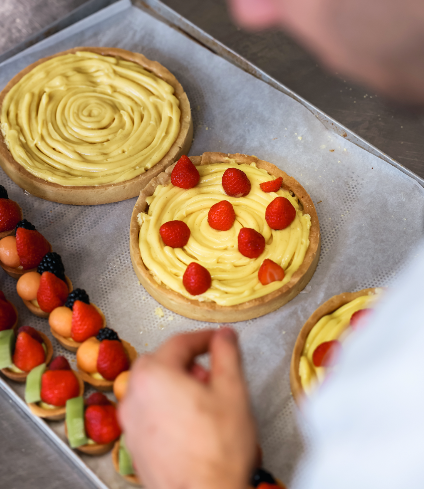
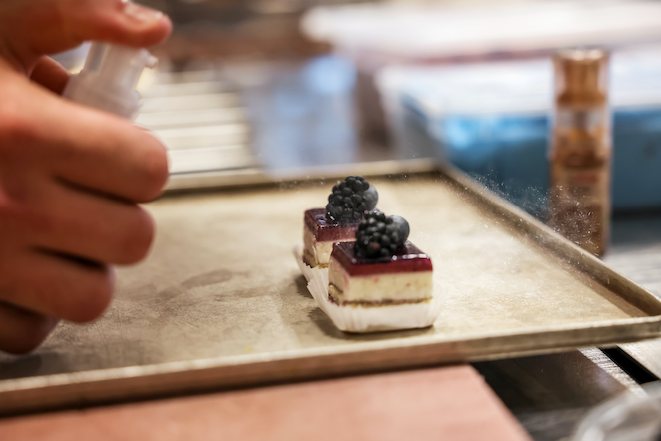
When the dessert is ready for the display case
Before arriving in the display case, a dessert must pass a simple but decisive test: it must really be good and receive the approval of several palates that rotate around the management of a pastry shop.
It must not only convince at the first tasting, but also at the second. And then also at the third. It must maintain balance, lightness and pleasantness, always, consistently.
When this happens, the dessert is ready to be shared and offered. And it is only then that it appears in the pastry shop display case, at the end of a long process that can take months of trials, of raw materials, of choices and of quantities. And thus the new jewel takes its place in the display case to delight the eyes and then the palates.