


What’s the difference between mousse, cream, semifreddo, and Bavarian cream?

Mousse: the lightness that comes from the air
“Mousse” in French means “foam.” The name says it all.
Mousse originated between the 18th and 19th centuries in France, when pastry chefs began experimenting with lighter consistencies by incorporating air into their preparations through whipped egg whites or whipped cream.
Its structure depends not only on the ingredients, but on the gesture: whipping, lightening, lifting. Air becomes an integral part of the recipe.
A mousse is soft, almost impalpable. It melts quickly in the mouth. It is less dense than a cream and more immediate than a Bavarian cream.
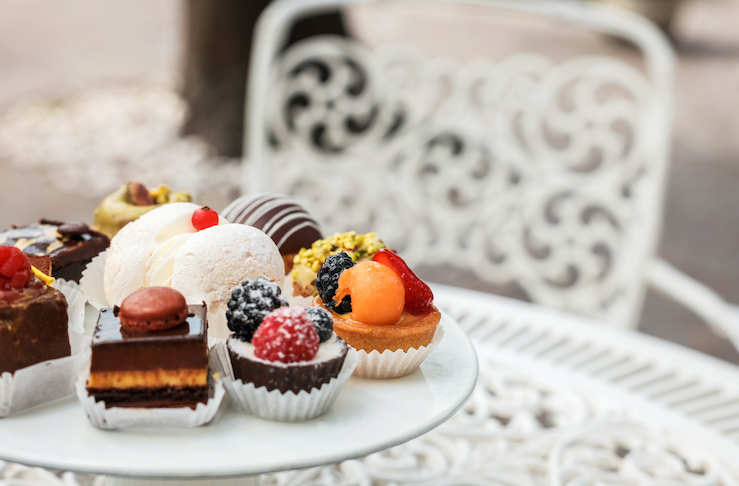
At La Fenice, this lightness is found in the chocolate mousse that accompanies the single portions, small cakes that are always fresh and varied, ranging through seasonal flavors; here, the intense, pure cocoa is lightened by the whipping, creating a balance between depth and delicacy. Or in the pistachio mousse that accompanies some of your creations.
Choosing a mousse means looking for something that caresses the palate, that isn’t heavy, that leaves an airy, light, and positive sensation.
Semifreddo: the balance between cold and creamy
The semifreddo, on the other hand, has a more Italian origin, developed between the nineteenth and twentieth centuries. It is a preparation that combines pastry techniques with those of ice cream making.
Its name tells its story: it is neither ice cream nor cream. It is something in between. It is usually made with a base of pâte à bombe (egg yolks whipped with hot syrup, a technique also used for pasteurization), Italian meringue, or whipped cream, and is then frozen. The presence of air and fat prevents it from becoming hard and frozen.
The consistency is cold but soft, firm but not rigid. It slices easily, holds its shape, and melts slowly.
At La Fenice, semifreddo is expressed, for example, in the three-chocolate semifreddo, where creaminess meets freshness, perfect in the warmer seasons or as an elegant end to a delicious dinner. The three layered chocolates will please every palate, from those who love white chocolate to those who prefer the lactic acid of milk chocolate, and even those who enjoy the bitterness of dark chocolate.
Choosing a semifreddo like this means craving freshness without sacrificing the roundness and deliciousness of chocolate.
The Bavarian: The meeting between France and Germany
The name “Bavarois” harks back to Bavaria, but its origins actually date back to France between the 18th and 19th centuries. It’s a preparation that combines crème anglaise (milk, sugar, and gently cooked egg yolks), gelatin, and whipped cream. Unlike mousse, Bavarian cream has a structure stabilized by the presence of gelatin. This allows it to maintain a precise, clean, almost architectural shape, while remaining soft when cut.
It’s silky, elegant, more compact than mousse, but more delicate than a semifreddo. Its strength lies precisely in its balance.
At La Fenice, it can be found in desserts such as the vanilla Bavarian cream with red fruit insert, where the well-defined structure embraces a livelier and slightly tart center. A dessert that combines technical precision and a harmony of flavors, as well as a visual presentation that immediately entices the palate. Choosing a Bavarian cream means seeking elegance, balance, and a softness that remains composed.